
Nissan Frontier is the name for the D22 and D40 generations of Nissan pickup trucks in North, Central and South America and the Philippines. The line was started in 1998, and its immediate predecessor is the D21 Nissan Hardbody truck. As of 2002, the D22 series Nissan Truck is no longer sold in Japan, with the primary market having been relocated to North America, built at the Smyrna, Tennessee Nissan factory. Nissan was the pioneer of the Hardbody or Nissan Navara since 1986. The first was the D21, considered to be a small pick up. After more than 10 years with the D21, the second generation Navara was manufactured from 1998 and went until 2005 which was classed as a compact sized pick up. It was replaced with the bigger, taller, longer D40, which Nissan now considers to be a mid-size pick up truck. The Navara gets its name from the Navarre region of northern Spain, and the European version is built at the Nissan factory in Barcelona. The Frontier was introduced in 1997 for the 1998 model year as a replacement for the aging 1986.5–1997 Nissan Hardbody Truck. Nissan first offered the Frontier with a 4-cylinder engine, the KA24DE, but added the V6 engine, the VG33E in 1999. Elsewhere, the Frontier was also known as the Nissan Navara. That changed, with the introduction of the 2000 Frontier Crew Cab. The Crew Cab was the first compact pickup to offer a 4-door body-style in North America. Until that point, crew cabs were heavy duty versions of full-size trucks and were mainly used as commercial vehicles, although four-door compact pickups existed in Asia and Europe for decades. For 2001, Nissan facelifted the Frontier, introducing bolder styling in an effort to make it more appealing to younger buyers in its second generation. The Frontier was completely redone after the 2004 model year, which later resulted in the suspension of the regular cab model, indefinitely.


The first Gen Frontier (2001–2004) was not sold or produced in Japan. Sales and production started in North America, with Crew Cab and King Cab versions and new grille, bumper, headlights, taillights, built in fender flares, and tailgates. Available engines include a petrol 2.4L, 3.3L, and a 3.3L Supercharged version 210 hp (160 kW). It is available with both 2 wheel and 4 wheel drive. The plant in Spain replaced production in Japan. They began exporting the second generation to Central and South America where it is called Frontier. Single Cabs and Crew Cabs are available with the Petrol or Diesel engines, 2wd and 4wd. Also in Australia and New Zealand. Brazil plant started production around 2002 (Crew Cab Diesel 2wd or 4wd, 5 speed manual, or single cab 2wd Diesel. Only for export to Mexico petrol 2.4 cc Built in Mexico) and export to Argentina (all Brazilians versions) and Mexico (Crew Cab, Petrol 2.4L, 2wd, Manual 5 speed). Egypt Plant export to Middle East, South Africa Plant to African countries. Mexico production, starting in 2008: D22 truck Single Cab Chassis and Long Bed (2wd or 4wd, Petrol 2.4L or Diesel, Crew Cab (2wd and Petrol) called D22 Pick up, Nissan Mexicana import from USA D40 Frontier V6. Initially, the Frontier was considered a compact, but beginning with the totally redesigned model year 2005 Frontier (introduced at the 2004 North American International Auto Show), it became more mid-sized. It uses the new Nissan F-Alpha platform and exterior body styling resembles that of the company's full-size Nissan Titan truck. The new truck's wheelbase is 125.9 in (3.20 m) with a 205.5 in (5.22 m) overall length. Towing capacity is 6500 lb (2,950 kg). A 4.0 L VQ-family V6, the VQ40DE, is the standard engine, and it produces a respectable 265 hp (198 kW) with 284 ft·lbf (385 N·m) of torque. Also available is the QR25DE four-cylinder engine, which is also found in the Nissan Altima. A six-speed manual is standard with a five-speed automatic optional. Both rear and four-wheel drive are available. Traction control and hill-descent control are also available. The Frontier is called Navara when sold in Europe. The engine is a 2.5 L YD25DDTi diesel, with 142 hp (106 kW) or 172 hp (128 kW). The stronger version has 403 N·m (297 lb·ft) of torque.


Nissan has released the complete details and images of the 2010 Nissan Navara facelift along with the 2011 Nissan Pathfinder facelift. The 2010 Nissan Navara facelift are now powered by a new 3.0-litre V6 turbo V9X Engine diesel engine producing 240 hp (175 kW),406 lb-ft (500 Nm) @ 2,500 rpm and a revised 2.5-litre dCi unit(YD25DDTi High Power). The 2011 Nissan Navara and Pathfinder facelift V6 develop 170 kW (231 PS) and 550 Nm of torque between 1,700 rpm and 2,500 rpm an the famous YD engine which produces 190 PS (140 kW) and 450 Nm of torque an the VQ40DE remains the same with the 265 hp @5600 rpm; 291 ft·lbf (395 N·m) @4000 rpm. There are subtle changes to the headlights and the bonnet. The v-shaped grille shell is less pronounced and the bumper is rounder and projects 80mm further forward, but it's the six-spoke 17-inch alloy wheels or optional 18-inch alloy wheels that will be the plainest tell-tale to the new vehicle's identity. Inside the new Navara (top of the line model), Nissan designers have specified softer materials of a better quality for the dash, seats and interior moulds. The centre console and fascia designs have been revised, as have the instrument binnacle layout and door trims. Additional bright/gloss finish surfacing is used throughout the cabin. The six-stack CD audio system or the TV Navigation entertainment console is upgraded with speed-sensing volume, MP3 compatibility and Bluetooth connectivity for the (six-stack CD audio system). Other new or revised features include dual-zone climate control, remote audio/Bluetooth/trip computer controls on the steering wheel, trip computer, external temperature gauge, speed-sensitive variable windscreen wipers and 'follow me home' lighting. The electric mirrors now fold in fully for car washes or parking in narrow spaces. The Frontier is known as Nissan Navara in most of Europe and Australia and New Zealand, and Nissan Terrano in Chile (only D40 series is known as Navara). It is currently built in Smyrna, Tennessee, Spain, South Africa, Thailand, Philippines, China, Mexico, Brazil and Egypt.The D40 Navara has undergone Euro NCAP crash testing along with the Mitsubishi Triton and Isuzu D-Max, and received one star with a strikeout; however, after retesting with upgraded computer software it went from the lowest in the group to the highest (overall) with 3 stars. Among the problems discovered during the test was delayed airbag deployment and insufficient seatbelt restraint, which were solved with the software upgrade.


 Silver Vauxhall Corsa On The Road
 Exotic Blue Vauxhall Corsa
 Sporty Vauxhall Corsa
 Vauxhall Corsa Beautiful Lighting
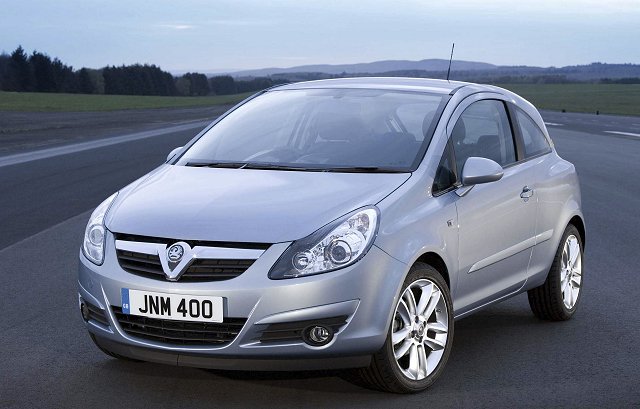 Luxury Silver Vauxhall Corsa
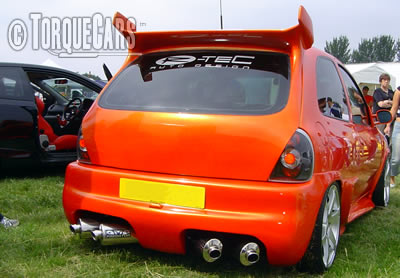 Vauxhall Corsa Tuning
 Red Vauxhall Corsa
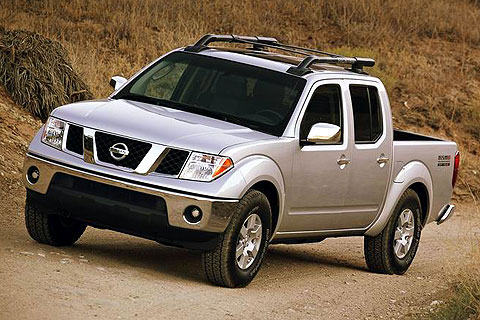 Nissan Frontier is the name for the D22 and D40 generations of Nissan pickup trucks in North, Central and South America and the Philippines. The line was started in 1998, and its immediate predecessor is the D21 Nissan Hardbody truck. As of 2002, the D22 series Nissan Truck is no longer sold in Japan, with the primary market having been relocated to North America, built at the Smyrna, Tennessee Nissan factory. Nissan was the pioneer of the Hardbody or Nissan Navara since 1986. The first was the D21, considered to be a small pick up. After more than 10 years with the D21, the second generation Navara was manufactured from 1998 and went until 2005 which was classed as a compact sized pick up. It was replaced with the bigger, taller, longer D40, which Nissan now considers to be a mid-size pick up truck. The Navara gets its name from the Navarre region of northern Spain, and the European version is built at the Nissan factory in Barcelona. The Frontier was introduced in 1997 for the 1998 model year as a replacement for the aging 1986.5–1997 Nissan Hardbody Truck. Nissan first offered the Frontier with a 4-cylinder engine, the KA24DE, but added the V6 engine, the VG33E in 1999. Elsewhere, the Frontier was also known as the Nissan Navara. That changed, with the introduction of the 2000 Frontier Crew Cab. The Crew Cab was the first compact pickup to offer a 4-door body-style in North America. Until that point, crew cabs were heavy duty versions of full-size trucks and were mainly used as commercial vehicles, although four-door compact pickups existed in Asia and Europe for decades. For 2001, Nissan facelifted the Frontier, introducing bolder styling in an effort to make it more appealing to younger buyers in its second generation. The Frontier was completely redone after the 2004 model year, which later resulted in the suspension of the regular cab model, indefinitely.

 Nissan has released the complete details and images of the 2010 Nissan Navara facelift along with the 2011 Nissan Pathfinder facelift. The 2010 Nissan Navara facelift are now powered by a new 3.0-litre V6 turbo V9X Engine diesel engine producing 240 hp (175 kW),406 lb-ft (500 Nm) @ 2,500 rpm and a revised 2.5-litre dCi unit(YD25DDTi High Power). The 2011 Nissan Navara and Pathfinder facelift V6 develop 170 kW (231 PS) and 550 Nm of torque between 1,700 rpm and 2,500 rpm an the famous YD engine which produces 190 PS (140 kW) and 450 Nm of torque an the VQ40DE remains the same with the 265 hp @5600 rpm; 291 ft·lbf (395 N·m) @4000 rpm. There are subtle changes to the headlights and the bonnet. The v-shaped grille shell is less pronounced and the bumper is rounder and projects 80mm further forward, but it's the six-spoke 17-inch alloy wheels or optional 18-inch alloy wheels that will be the plainest tell-tale to the new vehicle's identity. Inside the new Navara (top of the line model), Nissan designers have specified softer materials of a better quality for the dash, seats and interior moulds. The centre console and fascia designs have been revised, as have the instrument binnacle layout and door trims. Additional bright/gloss finish surfacing is used throughout the cabin. The six-stack CD audio system or the TV Navigation entertainment console is upgraded with speed-sensing volume, MP3 compatibility and Bluetooth connectivity for the (six-stack CD audio system). Other new or revised features include dual-zone climate control, remote audio/Bluetooth/trip computer controls on the steering wheel, trip computer, external temperature gauge, speed-sensitive variable windscreen wipers and 'follow me home' lighting. The electric mirrors now fold in fully for car washes or parking in narrow spaces. The Frontier is known as Nissan Navara in most of Europe and Australia and New Zealand, and Nissan Terrano in Chile (only D40 series is known as Navara). It is currently built in Smyrna, Tennessee, Spain, South Africa, Thailand, Philippines, China, Mexico, Brazil and Egypt.The D40 Navara has undergone Euro NCAP crash testing along with the Mitsubishi Triton and Isuzu D-Max, and received one star with a strikeout; however, after retesting with upgraded computer software it went from the lowest in the group to the highest (overall) with 3 stars. Among the problems discovered during the test was delayed airbag deployment and insufficient seatbelt restraint, which were solved with the software upgrade.
 The Hyundai Elantra in South Korea, is a compact car from Hyundai of South Korea launched in October 1990 for the 1991 model year, and now in its fifth generation. The Elantra was formerly marketed as the Lantra in Australia and some European markets. In Australia, this was due to the similarly named Mitsubishi Magna Elante model. This gave rise to disagreement from other motor manufacturers, and the name was standardized as "Elantra" worldwide in 2001 (with the exception being Korea and Malaysia still selling under the name "Avante"). Launched in 1990 , the Elantra (codename J1) received a mid-term facelift in 1993. The Elantra was powered by a Mitsubishi-designed 1.6 L (1596 cc) straight-4 This DOHC 16-valve 1.6 L unit produced 113 hp (84 kW) at 6000 rpm and could push the Elantra to 60 mph (97 km/h) in 9.5 seconds. The quarter-mile (0.4 km) run took 17.1 seconds and produced 80 mph (129 km/h). Top speed was 116 mph (187 km/h). The Elantra got 22 mpg[clarification needed](10.7 L/100 km) in the city cycle. Starting in 1993 there was also a Mitsubishi-designed 1.8 L (1836 cc) straight-4 engine available the 1.8L unit that produced 124 hp (99 kW) at 6000 rpm. Launched in 1995, the second generation (codename J2) was offered as a sedan and station wagon. It was sold in the Korean market as the Avante in sedan form and Avante Touring in station wagon bodystyle. Between 1996 and 1998, the Elantra was marketed as the Bimantara Nenggala (1.8 litre petrol) in Indonesia. (The Cakra (1.5 litre petrol) was based on the Accent (X3).)
 An all-new model (codename XD) was launched in 2000. The wagon was dropped in favor of a five-door hatchback. Starting in 2001, all American models came with standard front and front side airbags, air conditioning, power locks, power windows and power steering. This simplified dealer inventories and repairs and also sought to improve Hyundai's image of 'value' cars. In 2003, the Elantra received a facelift for all models (codename XD2). The facelift gave the Elantra new headlights and taillights, a new grille, new front and rear bumpers, a refreshed hood and trunk, and a refreshed dashboard. A redesigned Elantra sedan (designated HD) debuted at the 2006 New York Auto Show for model year 2007. In North America, the Elantra also offers the most interior room in its class, leading the United States Environmental Protection Agency (EPA) to classify it as a mid-size car. Beijing Hyundai launched a redesigned Elantra called the "Hyundai Elantra Yue Dong" for the Chinese market with an updated exterior. The engine lineup includes 1.6- Gamma and 2.0-liter Beta II gasoline inline-four engines, and a 1.6-liter turbodiesel inline-four. Only the 2.0-liter engine is offered in North America. All engines feature improved fuel economy over previous versions. A five-speed manual transmission is standard and a four-speed automatic is optional. Hyundai began producing the Avante "LPI Hybrid" and it was launched in the South Korean domestic market in July 2009. The Avante LPI (Liquefied Petroleum Injected) is the world's first hybrid electric vehicle to be powered by an internal combustion engine built to run on liquefied petroleum gas (LPG) as a fuel. The Hyundai Avante LPI is a mild hybrid and the first hybrid to adopt advanced lithium polymer (Li–Poly) batteries.
 Hyundai offers a Hyundai i30 wagon in the US and Canada marketed as the "Elantra Touring". Elsewhere, the same vehicle is marketed as the Hyundai i30cw.The fifth generation Avante, codenamed "MD", debuted at the 2010 Busan International Motor Show in April 2010. It features a 1.6L gasoline direct-injection engine, producing 103 kW (138 hp) and 167 Nm (123 lb-ft) torque, mated to a new 6-speed automatic or a 6-speed manual transmission. The design continues Hyundai's "fluidic sculpture" styling theme first seen in the 2011 Sonata. The new model went on sale in August 2010 in South Korea, and is expected to begin selling between end of 2010 and early 2011 as a 2011 model. The US version of the fifth generation Elantra debuted at 2010 Los Angeles Auto Show. It is powered by a new 1.8L Nu engine producing 148 hp (145 hp-PZEV) and 131 lb-ft (130 lb-ft-PZEV). EPA estimates for the new Elantra are 29 mpg-US (8.1 L/100 km; 35 mpg-imp) in the city and 40 mpg-US (5.9 L/100 km; 48 mpg-imp) on the highway. The fuel economy was increased with a low coefficient of drag, just 0.28. The Elantra will be available in two trim levels-GLS and Limited. Some of the premium features will be heated front and rear seats, proximity key entry with electronic push button start with immobilizer, navigation with touch screen. Mitsubishi Motors of Australia complained that Elantra was too close to its Elante trim level (last used on the 1991 Magna), and Lotus (as well as Kia) in the UK and Europe suggested it was too close to its Elan name, and its Kia counterpart. By 2001, both the Elan and the Elante had ceased production but the Avante's renaming remained necessary as Audi owned the Avant name in Europe.


