Prius is a Latin word meaning "to go before". According to Toyota, the name was chosen because the Prius was launched before environmental awareness became a mainstream social issue. In February 2011, Toyota asked the public to decide on what the most proper plural form of Prius should be, with choices including Prien, Prii, Prium, Prius, or Priuses. The company says "it will use the most popular choice in its advertising" and on February 20 announced that "Prii" was the most popular choice, and the new official plural designation. In 1995, Toyota debuted a hybrid concept car at the Tokyo Motor Show, with testing following a year later. The first Prius, model NHW10, went on sale on December 10, 1997. It was available only in Japan, though it has been imported privately to at least the United Kingdom, Australia, and New Zealand. The first generation Prius, at its launch, became the world's first mass-produced gasoline-electric hybrid car. The NHW10 Prius styling originated from California designers, who were selected over competing designs from other Toyota design studios. In the United States, the NHW11 was the first Prius to be sold. The Prius was marketed between the smaller Echo and the larger Corolla. The published retail price of the car was US$19,995. The NHW11 Prius became more powerful partly to satisfy the higher speeds and longer distances that Americans drive. Air conditioning and electric power steering were standard equipment. The vehicle was the second mass-produced hybrid on the American market, after the two-seat Honda Insight. While the larger Prius could seat five, its battery pack restricted cargo space. The California Air Resources Board (CARB) classified the car as a Ultra Low Emission Vehicle (ULEV). Prius owners were eligible for up to a US$2,000 tax credit from their gross income. In contrast with the NW10, Toyota executives claimed that the company broke even financially on sales of the NHW11 Prius. European sales began in September 2000. The official launch of the Prius in Australia occurred at the October 2001 Sydney Motor Show, although sales were slow until the NHW20 model arrived.

New Toyota Prius Design

In 2004 the Prius was completely redesigned as a mid-size liftback, sized between the Corolla and the Camry, with redistributed mechanical and interior space significantly increasing rear-seat legroom and luggage room. The 2004 Prius is even more environmentally friendly than the 2001 model (according to the EPA), and is 6 inches (150 mm) longer than the previous version. Its more aerodynamic Kammback body balances length and wind resistance, resulting in a drag coefficient ( Cd) of 0.26. The development effort, led by chief engineer Shigeyuki Hori, led to 530 patents for the vehicle. Toyota debuted the new Prius (2010 US model year) at the January 2009 North American International Auto Show, and sales began in Japan on May 18, 2009. Toyota cut the price of the Prius from ¥2.331 million to ¥2.05 million to better compete with the Honda Insight, leading some to wonder whether increased sales of the Prius might come at the expense of sales of other vehicles with higher margins. Competition from lower priced hybrids, such as the Honda Insight, also made it difficult for Toyota to capitalize on the Prius's success. Its new body design is more aerodynamic, with the coefficient of drag reduced to 0.25 Cd. An underbody rear fin helps stabilize the vehicle at higher speeds. The estimated fuel-efficiency rating, using the U.S. EPA combined cycle, is 50 mpg-US (4.7 L/100 km; 60 mpg-imp). The Prius was the most efficient car powered by liquid fuel available in the U.S. in 2009, based on the official rating. Only the first-generation Honda Insight (2000–2006) equipped with a manual transmission attained a lower fuel consumption rate. The official UK fuel efficiency data for the Prius T3 is Urban 72.4 mpg-imp (3.90 L/100 km; 60.3 mpg-US), Extra Urban 76.4 mpg-imp (3.70 L/100 km; 63.6 mpg-US), Combined 72.4 mpg-imp (3.90 L/100 km; 60.3 mpg-US). The 1.8-liter gasoline engine (previously 1.5 liters) generates 98 hp, and with the added power of the electric motor generates a total of 134 hp (previously 110 hp). The larger engine displacement allows for increased torque, reducing engine speeds (RPM), which improves fuel economy at highway speeds. Thanks to its electric water pump, the Prius engine is the first consumer automotive production engine that requires no accessory belts, which also further improves its fuel economy. The electric motors and other components of the hybrid powertrain are also smaller and more efficient than the industry average. Toyota estimates the new inverter, motor and transaxle are 20 percent lighter. Disc brakes replace the previous rear drum brakes. In constructing the Prius, Toyota used a new range of plant-derived ecological bioplastics, made out of cellulose derived from wood or grass instead of petroleum. The two principal crops used are kenaf and ramie. Kenaf is a member of the hibiscus family, a relative to cotton and okra; ramie, commonly known as China grass, is one of the strongest natural fibres, with a density and absorbency comparable to flax. Toyota says this is a particularly timely breakthrough for plant-based eco-plastics because 2009 is the United Nations’ International Year of Natural Fibres, which spotlights kenaf and ramie among others.

Toyota Prius Exotic Exterior

The Prius Plug-in Hybrid is a demonstrator plug-in hybrid vehicle (PHEV) based on a third generation Toyota Prius (model ZVW30) outfitted with 5.2 kWh lithium-ion batteries, with an all-electric range of 13 mi (21 km). A global demonstration program involving 600 pre-production test cars began in late 2009 and is taking place in Japan, Europe, Canada, China, Australia, New Zealand and the United States. The Prius Plug-in is scheduled for retail sales in the United States in the second quarter of 2012 and will be initially offered only in 15 states. According to Toyota these are the states where nearly 60 percent of all Prius models are currently sold. The Prius Plug-in will be available in all remaining states one year later. In April 2011 Toyota opned its priority registration website for customers interested in ordering the 2012 Prius Plug-in Hybrid, even though the purchase price has not been announced. At the January 2011 North American International Auto Show, Toyota revealed the 2012 model year Prius v, an extended hatchback wagon, which features over 50 percent more interior cargo space than the original Prius design. Toyota also unveiled the Prius c concept, which in production form is expected to be cheaper and smaller than the current Prius hatchback. Toyota expects the Prius v to go on sale in mid- to late 2011, and a car based on the Prius c concept to enter production in the first half of 2012. Toyota plans to offer the U.S. Prius v version with a nickel-metal hydride battery pack similar to the 2010 model year Prius, and with two rows of seats to accommodate five passengers. The European and Japanese versions will be offered with a lithium-ion battery, with three rows of seats with accommodations for seven passengers. In the Japanese market the nickel-metal hydride version is expected to sell for¥2.35 million (US$28,400), and the lithium-ion version for ¥3 million yen (US$36,300). In May 2011 Toyota introduced the Prius Alpha in Japan, which is derived from the third-generation Prius. The Alpha is the basis for the five-seat Prius v planned for launch in North America, and the seven-seat Prius + planned for launch in Europe. The Prius Alpah is available in a five-seat, two-row model and a seven-seat, three-row model, the latter’s third row enabled by a space-saving lithium-ion drive battery in the center console. The five-seat model uses a NiMH battery pack. Deliveries of the Alpha will be delayed due to the effects of the 2011 earthquake and tsunami on production. Toyota announced it had received 25,000 orders for the Prius Alpha hybrid wagon and minivan models in Japan before the start of sales.


 Newest Toyota Matrix Model For 2011
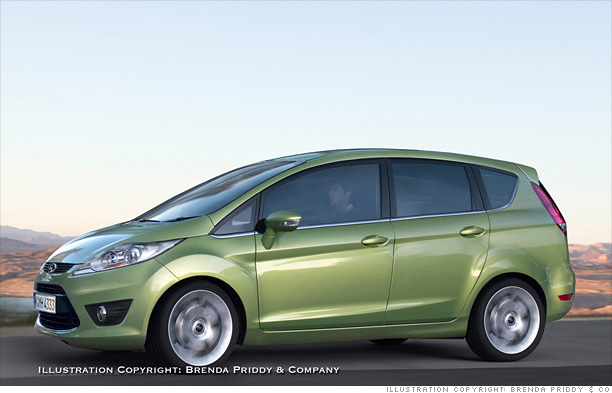 On the outside, the subtle refresh is limited to all-new front and rear bumpers with integrated front and rear underbody spoilers and a large mesh front fog lamp bezel. The newly designed 16-inch steel wheels and 17-inch, five-spoke alloy rims plus the introduction of a new Spruce Mica color round off the changes.
 2011 Toyota Matrix On The Road
 2011 Toyota Matrix is attainable in two versions: base Matrix and the sporty S grade. Powertrain selection conatain 1.8- and 2.4-liter four-cylinder engines, a five-speed manual transmission, and either four- or five-speed automatic transmissions. All-wheel drive (AWD) with active torque control is available in the Toyota Matrix S, teamed to the 2.4-liter engine.
 2011 Toyota Matrix Interior View
 The 2011 Toyota Matrix has everything to forward you top most comfort while having an easy ride. Engine of this 2011 Toyota Matrix has a strong horse power while soundless starting. This 2011 Toyota Matrix is really easy to drive and control in a rough and scattered road.
 The Matrix grade is provided with a 1.8-liter DOHC four-cylinder engine, which devolopes 132 hp at 6,000 rpm and 128 lb.-ft. of torque at 4,400 rpm. Dual Variable Valve Timing with intelligence (VVT-i) controls valve timing on both the taking in and exhaust camshafts to help make optimal performance and economy. The 1.8-liter engine is paired with a five-speed manual transmission or a four-speed Electronically Controlled automatic Transmission (ECT).